The Anti-Bullying Act of 2013, or Republic Act No. 10627, is the Philippine law that requires all public and private elementary and secondary schools to adopt policies that prevent and address bullying, including cyberbullying. It defines what bullying is, tells schools what their policies must contain, requires bullying to be reported to the school head, and lets the Department of Education (DepEd) sanction schools that fail to comply. DepEd updated the rules that carry out the law in August 2025.
This guide explains the anti bullying act in plain language for parents, students and teachers, and what you can do if a child you know is being bullied.
What the Anti-Bullying Act says
RA 10627 was approved on September 12, 2013. You can read the full text of Republic Act No. 10627 online. It is short, and its main parts are below.
How the law defines bullying
Under Section 2, bullying is any severe or repeated use by one or more students of a written, verbal or electronic expression, or a physical act or gesture, directed at another student, that:
- causes or puts the student in reasonable fear of physical or emotional harm or damage to property;
- creates a hostile environment at school for the student;
- infringes on the student's rights at school; or
- materially and substantially disrupts the education process or the orderly operation of the school.
The law gives examples:
- Physical: unwanted physical contact such as punching, pushing, shoving, kicking or slapping.
- Emotional: acts that damage a victim's psyche or emotional well-being.
- Verbal and social: slanderous statements or accusations, name-calling, and mocking someone's looks or traits.
- Cyberbullying: any bullying done through technology or electronic means, such as group chats, social media posts and messages.
Which schools are covered
The Act covers all elementary and secondary schools, public and private. The 2025 revised rules apply the policy to all public and private basic education schools under DepEd, including community learning centers and Philippine schools overseas. Colleges and universities are not covered by RA 10627 itself, though many have their own codes of conduct.
Where bullying is covered
School policies must prohibit bullying on school grounds, at school-sponsored activities, on school transport, and through technology owned by the school. Bullying that happens off campus, including online, is also covered when it creates a hostile environment at school for the victim or disrupts learning. Retaliation against anyone who reports bullying is prohibited too.
What schools must do under the anti bullying act
Section 3 lists what every school's anti-bullying policy must include at minimum:
- A clear ban on bullying and on retaliation against those who report it.
- Disciplinary actions that fit the gravity of the offense, plus a rehabilitation program for the student who bullied.
- Procedures for reporting, prompt investigation, protecting victims and witnesses, and counseling.
- A way to report anonymously. However, a student cannot be disciplined on the basis of an anonymous report alone.
- Discipline for students who knowingly make false accusations.
- Education for students, parents and guardians about bullying and the school's policy.
- A public record of bullying statistics, with the names of those involved kept strictly confidential.
Schools must give copies of the policy to students and parents, include it in student handbooks, and post it on school walls and websites.
What happens after a report
The school head oversees the policy. Under Section 4, teachers, staff, students, parents and volunteers should report bullying immediately to the school head or the designated officer. If an investigation confirms bullying, the school must:
- take the right disciplinary action;
- notify the parents or guardians of the student who bullied;
- inform the victim's parents or guardians of the action taken; and
- notify law enforcement if the acts may amount to a crime under the Revised Penal Code.
Schools also report their policies and yearly bullying statistics to their DepEd division office. Under Section 6, DepEd may sanction school officials who fail to comply, and private schools that fail to comply may have their permit to operate suspended.
The 2025 revised rules
On August 4, 2025, DepEd issued revised implementing rules for the Anti-Bullying Act, updating the original 2013 rules. The main changes:
- Every school must adopt a standard anti-bullying policy with prevention and early-intervention programs.
- Each school designates a Learner Formation Officer, the first responder for bullying complaints, who handles and refers cases.
- Clear roles for school heads, teachers, parents and students.
- Clear steps for handling, resolving and appealing complaints.
- Procedures must appear in student handbooks and be posted visibly on campus.
Education Secretary Sonny Angara summed up the purpose: "Walang bata ang uunlad kung araw-araw siyang takot pumasok sa klase." No child can thrive if they are afraid to go to school every day.
The anti bullying act works alongside DepEd's broader Child Protection Policy (DepEd Order No. 40, s. 2012), which sets zero tolerance for abuse, violence and bullying in schools and creates a Child Protection Committee in each school.
What to do if your child is being bullied
- Listen first. Stay calm, thank your child for telling you, and make clear it is not their fault.
- Write it down. Note dates, places, names of those involved and witnesses. Take screenshots of online messages before they are deleted.
- Report to the school. Go to the adviser, guidance office, Learner Formation Officer or school head. Ask for a copy of the school's anti-bullying policy.
- Follow up in writing. Ask what steps the school will take and when. Keep copies of everything.
- Escalate if needed. If the school does not act, raise it with the DepEd schools division office.
- Get support. Bullying can hurt mental health. Ask the guidance counselor for help, and seek a professional if your child shows signs of distress.
- Call the police or barangay if your child is in danger or has been physically hurt.
If your child is the one bullying
Take it seriously, but do not give up on them. The law calls for rehabilitation, not just punishment. Talk calmly about what happened, cooperate with the school, and help your child make it right. Sometimes a child who bullies is struggling with something at home or school, so ask gently.
What students and the community can do
- Be an upstander. Do not laugh along or share hurtful posts. Stand with the person being targeted.
- Tell a trusted adult. Reporting is not sumbong for its own sake. It is how you protect a classmate.
- Think before you post. Screenshots last forever, and cyberbullying is covered by the law.
- Organize. Barangays, youth groups and parent-teacher associations can run talks and campaigns that make kindness the norm.
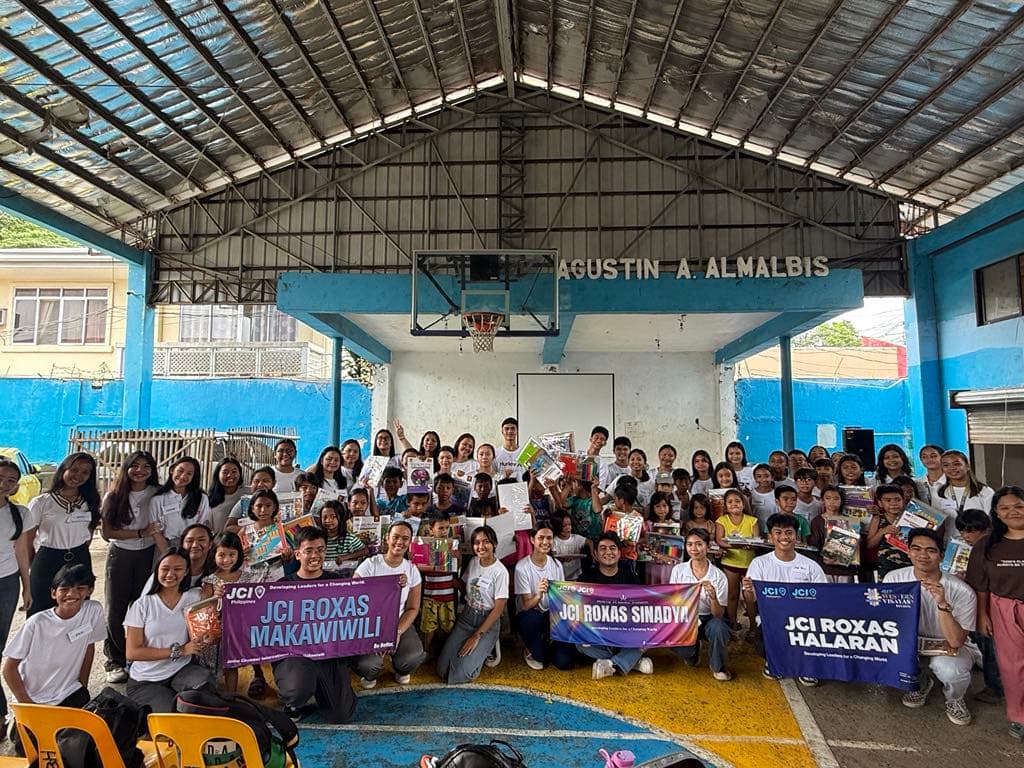
In Roxas City, JCI Roxas Halaran ran "Be a Friend, Not a Bully" in 2025, a project that teaches children kindness and respect through games, stories and teamwork activities. It was part of the chapter's Education for Peace work that year, which also included an Education for Peace training the chapter co-hosted on May 3, 2025. Activities like these help make the upstander habits above feel normal for young learners.
If your group wants to start a campaign, our guides to starting a community development project and writing a project proposal can help.
Frequently asked questions
What is the Anti-Bullying Act of 2013?
It is Republic Act No. 10627, which requires all elementary and secondary schools in the Philippines to adopt and enforce policies against bullying, including cyberbullying.
Is cyberbullying covered by the anti bullying act?
Yes. The law defines cyberbullying as bullying done through technology or electronic means. Schools must act on it when it affects a student's school life, even if it happens off campus.
Can a student be jailed under RA 10627?
The Act itself sets school discipline and rehabilitation, not jail time. But if the bullying is also a crime, such as physical injuries or threats, the school must notify law enforcement, and other laws may apply.
Does the Anti-Bullying Act apply to colleges?
No. RA 10627 covers basic education. Colleges and universities follow their own student codes and other laws.
Help make schools safer
Every child deserves to go to school unafraid. Support JCI Roxas Halaran's youth campaigns through our support page, or join the chapter and help lead the next one.