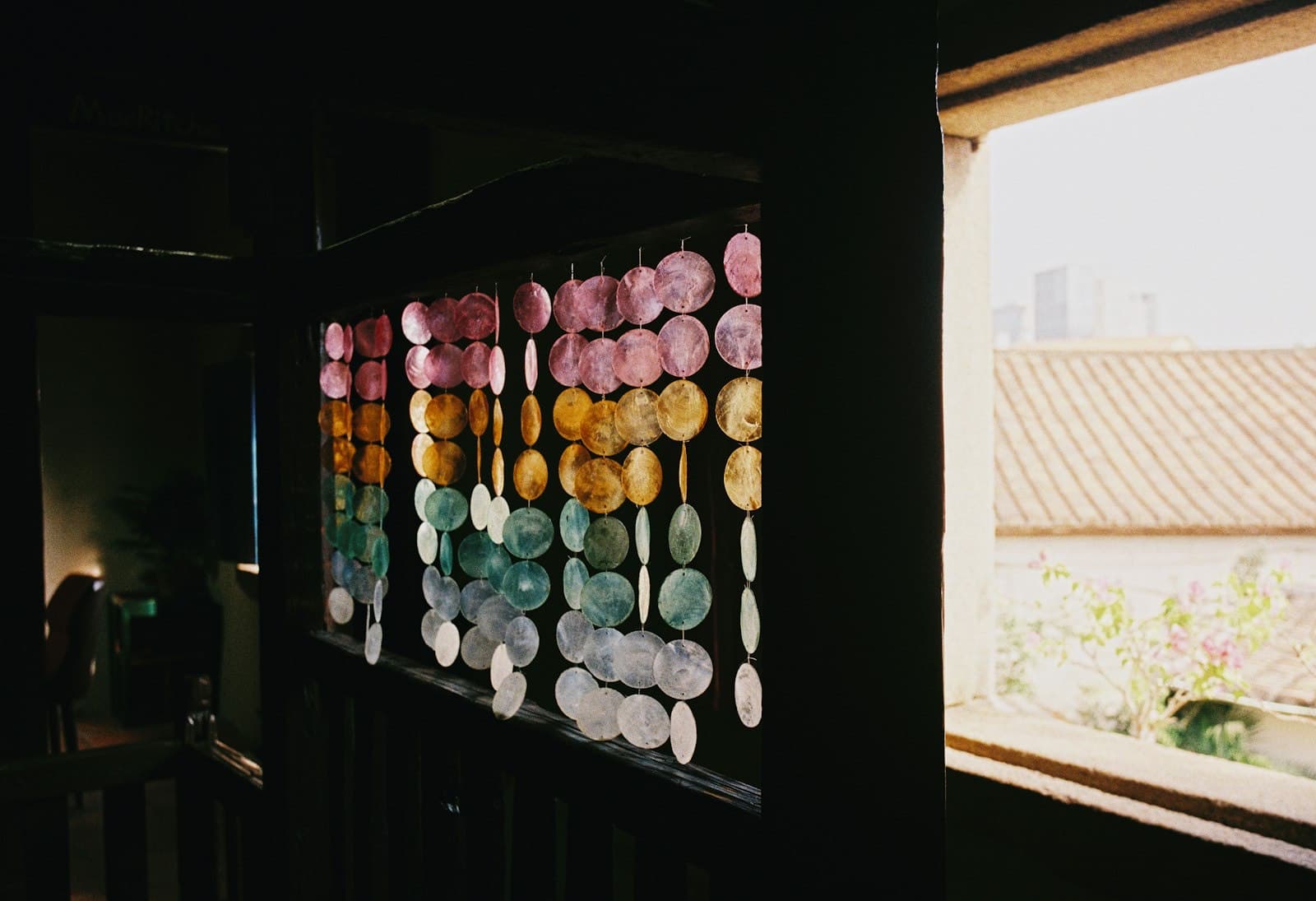
Capiz shells are the thin, flat, translucent shells of the windowpane oyster (Placuna placenta), a bivalve that lives in the shallow bays of the Philippines and grows abundantly in the province of Capiz. Because they let light through while keeping privacy, they were used for centuries in place of glass, and today they are made into lampshades, chandeliers, parols and home decor sold around the world. Locally the shell is called kapis.
If you have seen the soft, pearly glow of an old bahay na bato window or a shell parol at Christmas, you have seen capiz. Here is where it comes from, how it is crafted, and why it matters to Roxas City.
What are capiz shells?
The windowpane oyster is not the oyster most Filipinos eat with vinegar and garlic. It is a different species with a nearly flat, round shell that can grow up to about 18 centimeters across. Thin and pearly, the shell lets light pass through like frosted glass.
Some quick facts:
- Scientific name: Placuna placenta, also called the windowpane oyster or window shell.
- Habitat: muddy or sandy bottoms in bays, coves and lagoons, often in brackish water near river mouths.
- Range: from the Gulf of Aden through South and Southeast Asia, north to Taiwan and south to northern Australia.
- Ecology: it is a filter feeder, cleaning the water around it as it eats plankton.
- Food: the meat is edible and is often grilled or cooked as adobo, though the shell is the main prize.
The Slow Food Foundation's Ark of Taste, a catalog of traditional foods at risk of disappearing, lists the capiz shell from Western Visayas and notes that it is "abundant in the eponymous province of Capiz."
Capiz shells in Philippine history
Glass was scarce and expensive in the colonial Philippines. Capiz was neither. Builders cut the shells into small squares and set them in wooden lattice frames to make the large sliding windows of the bahay na bato. The result was a window that softened the harsh tropical sun, kept out rain and gave privacy, while still letting in a warm glow.
Under Spanish rule, especially in the 19th century, churches and family homes across the islands used capiz in place of glass. You can still see capiz windows in heritage houses and churches today. In Roxas City, the President Manuel Roxas Birthplace is a classic bahay na bato from that era. Learn about the man born there in Manuel Roxas: the Capiz-born president.
Did the province get its name from the shell?
Many Capiznons say so, and the link is natural: the shell is everywhere in local waters and crafts. Another legend ties the name to kapid, a word for twins. Neither story is settled. We cover both in a short history of Capiz.
How capiz shellcraft is made
According to the Roxas City government, the shells grow abundantly in the province and support a thriving shell-craft industry in the city, where local artisans shape them into household items. The general process looks like this:
- Gathering. Shells are collected from shallow bays and tidal flats.
- Cleaning. The meat is removed and the shells are washed and scraped.
- Softening. Shells are soaked or treated so they become easier to cut and shape without cracking.
- Cutting. Artisans trim the shells into squares, circles or other shapes with scissors or cutters.
- Coloring (optional). Some pieces are dyed or painted. Natural white remains the classic look.
- Assembly. The pieces are glued, wired or laminated onto frames to make the finished product.
It is patient, detailed handwork, and much of the skill is passed down within families and neighborhoods.
What capiz shells become
- Window panels and room dividers
- Lampshades, pendant lights and chandeliers
- Christmas parols (star lanterns) and ornaments
- Wind chimes, coasters, placemats, trays and boxes
- Picture frames, mirrors and wall art
Capiz decor is sold in Philippine malls and souvenir shops and exported to buyers abroad who love its natural, light-filtering look.
Why capiz shells need protecting
The capiz story has a warning in it. Windowpane oyster populations in the Philippines have declined over the decades because of destructive methods such as trawling, dredging, blast fishing and compressor diving. Overharvesting young shells also prevents them from reaching breeding size.
The country now manages the fishery through permits, quotas, size limits and protected areas, and local governments in Capiz have restricted gathering in the past. Local fishers still report fewer shells in the bays than before.
Protecting the shell protects more than a craft. Healthy bays are what make Roxas City the Seafood Capital of the Philippines, and the same waters feed many fishing families.
How to buy capiz shells responsibly
- Buy local. Purchase directly from Capiz artisans, cooperatives and trade fairs so more of the money stays with the makers.
- Ask about the source. A good seller can tell you where the shells came from and who made the product.
- Choose quality over quantity. A well-made lamp lasts for years. Cheap throwaway items use up shells fast.
- Check export rules. If you plan to ship shells or shell products abroad, ask the Bureau of Fisheries and Aquatic Resources about current permits first, since fishery and export rules can change.
- Do not gather your own. Leave live shells in the water, especially small ones.
Where to see capiz in Roxas City
Walk the old town and look up at the windows of heritage houses. Browse the souvenir stalls and pasalubong shops for capiz decor. Then head to the coast and see the waters these shells come from. Our guide to Capiz tourist spots, from Baybay Beach to Olotayan Island will help you plan the day.
Frequently asked questions
Are capiz shells real shells?
Yes. They are the natural shells of the windowpane oyster, Placuna placenta. Some cheaper decor imitates the look with plastic, so ask the seller if you are unsure.
Why are they called capiz shells?
Because the province of Capiz is famous for them. The shell grows abundantly in Capiz waters, and the Filipino word for it is kapis.
Are capiz shells fragile?
They are thin and can crack if bent or dropped, but they handle normal indoor use well. Dust them gently with a soft dry cloth and keep them away from heavy moisture.
Can you eat the windowpane oyster?
Yes. The meat is edible and is often grilled or cooked as adobo, though the species is valued mainly for its shell.
Keep Capiz's waters thriving
The sea and coastline shape who we are as a province. In June 2026, JCI Roxas Halaran held SA DAGAT on the Baybay Beach shoreline, a boat race for Baybay fisherfolk alongside Pinta Baruto, where eight local artists painted two donated fiberglass boats. The same month, Coastline Cuts gave free haircuts to 107 people in the coastal barangay of Dumolog. See all our projects, or become a member and help protect the waters that give Capiz its name and its living.