To organize a tree planting in the Philippines, secure a site with the landowner's or LGU's permission, ask your local DENR office or LGU environment office which native species suit that site, source healthy seedlings, plan the date for the rainy season, brief your volunteers, and, most importantly, assign people to care for the trees afterward. A tree planting is only a success if the trees are still alive a year later. Planting is the easy part. Survival is the real goal.
This step-by-step tree planting Philippines guide is written for schools, barangays, youth groups and companies in Capiz and anywhere in the country.
Why tree planting matters in the Philippines
Trees hold soil on slopes, reduce flooding downstream, cool our towns and give wildlife a home. Along the coast, mangroves protect communities from storm surge and serve as nurseries for the fish and crabs that so many Capiz families depend on.
The law encourages it too. The Arbor Day Act of 2012 (Republic Act No. 10176) requires every province, city and municipality, with its barangays, to declare an Arbor Day each year at a date suited to the local planting season. It requires all able-bodied Filipino citizens at least 12 years old to plant one tree every year, and it encourages endemic or indigenous species in protected areas. Separately, Proclamation No. 643 (2004) set June 25 of each year as Philippine Arbor Day. At the national level, the government's National Greening Program, expanded in 2015, aims to rehabilitate denuded and degraded forestlands through 2028.
In Hiligaynon, planting is pagtanum. It's one of the simplest acts of community service, and one of the easiest to get wrong if you skip the planning.
Step 1: Decide your goal
Ask why you are planting. The answer shapes everything else.
- Reforestation of a bare hillside or watershed.
- Mangrove rehabilitation along a coast or river mouth.
- Urban greening of a school, plaza, roadside or barangay hall.
- Fruit trees for food and income in community or school gardens.
Set a realistic number. Fifty well-cared-for trees are worth more than a thousand seedlings left to die.
Step 2: Find and secure a site
- Know who owns the land. Private land needs the owner's written permission. Public land, forestland and coastal areas usually need coordination with the LGU and the DENR.
- Visit the site before planting day. Check access, slope, soil, water and whether animals graze there.
- Confirm the site is right for trees. Not every open area should be planted. Grasslands, mudflats and seagrass beds have their own ecological roles. For mangroves, plant only where mangroves naturally grow or used to grow, and get advice first.
- Ask about long-term use. Make sure the area won't be cleared for a road or building next year.
Step 3: Choose the right species
Native species are usually the best choice. They are adapted to local conditions, support local wildlife and are less likely to become invasive. Well-known Philippine native trees include narra, the national tree, as well as molave and ipil. For coastal sites, mangrove species such as bakawan are common.
Don't guess. Your nearest DENR office or your city or municipal environment office can tell you which species fit your site and may know where to get seedlings. Ask a local forester or agriculturist if one is available.
Step 4: Get permits and partners
- Barangay: inform the punong barangay and ask for help with volunteers and long-term care.
- LGU: the environment or agriculture office can help with sites, seedlings and the local Arbor Day calendar.
- DENR: coordinate if the site is forestland, a protected area or coastal land.
- Schools and businesses: they can provide volunteers, transport, snacks or sponsorship. Our sponsorship letter sample helps you ask.
Put your plan in writing. Our event proposal template gives you a simple format to share with partners.
Step 5: Pick the right time
Plant at the start of the rainy season so seedlings get regular water while their roots establish. In 2026, PAGASA declared the onset of the rainy season in early June. That's one reason many LGUs hold Arbor Day activities in June. Avoid the peak of typhoon season for exposed sites, and always check the PAGASA forecast in the days before your event.
Step 6: Source healthy seedlings
- Order early, ideally weeks before planting day.
- Choose seedlings that are hardened, with healthy leaves and roots that aren't coiled or broken.
- Keep them shaded and watered until planting.
- Bring a few extras to replace damaged ones.
Step 7: Tree planting Philippines checklist for the day
Checklist
- Seedlings, plus extras
- Shovels, bolos, digging bars and gloves
- Stakes and tags to mark each tree
- Drinking water, snacks and a first aid kit
- Attendance sheet and a simple waiver for volunteers
- Reusable containers instead of single-use plastic
- A clear site map showing where each group plants
Volunteer briefing
Before anyone digs, spend ten minutes on safety and technique. Tell volunteers to wear closed shoes, long sleeves and a hat, and to stay with their group.
Step 8: Plant properly
- Clear grass and weeds in a small circle around the planting spot.
- Dig a hole about twice as wide as the seedling's root ball and as deep.
- Remove the plastic bag carefully without breaking the soil around the roots. Collect the bags for proper disposal.
- Place the seedling straight, with the top of the root ball level with the ground.
- Fill with soil, press gently to remove air pockets, and water if possible.
- Add a stake and a tag, and record the location.
Follow the spacing your DENR or LGU adviser recommends for the species.
Step 9: Care for the trees after planting
This is where most tree plantings fail. The Arbor Day Act assigns barangay officials and deputized NGOs responsibility for maintaining trees planted under it, so agree with your barangay on who does what before planting day.
- Assign a caretaker team, such as a purok, class or youth group, for each area.
- Weed around the seedlings and water during dry spells.
- Protect them from grazing animals with simple fencing or guards.
- Replace seedlings that die.
- Count surviving trees after 3, 6 and 12 months and share the results with partners.
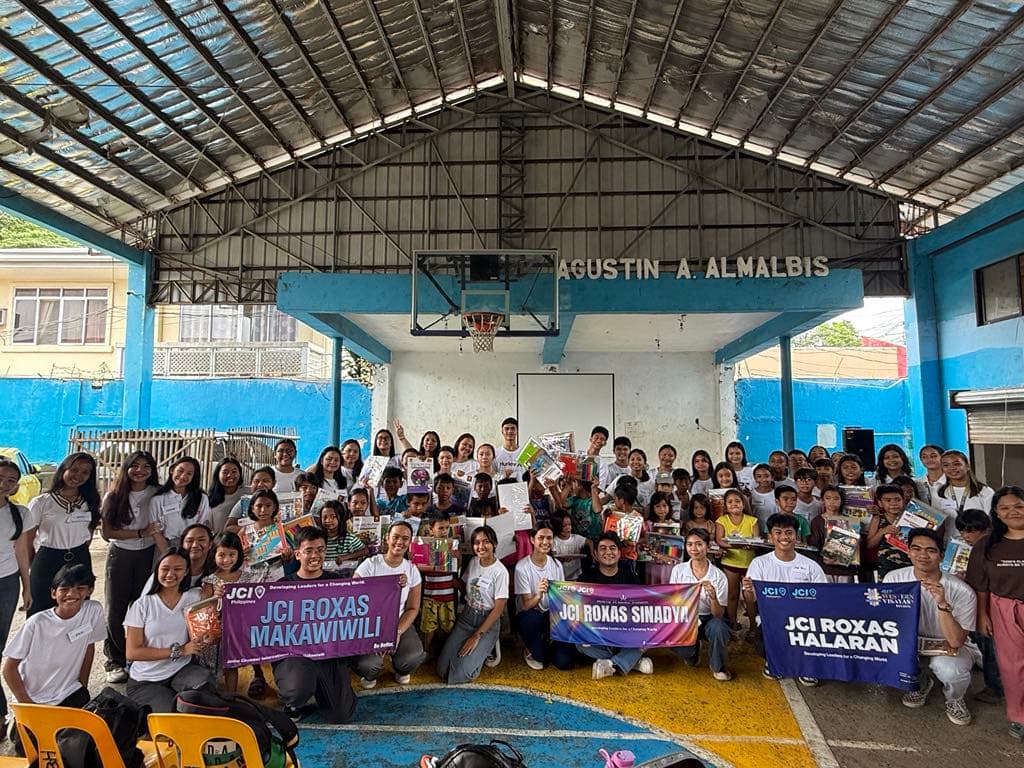
Tree planting with JCI Roxas Halaran
Our chapter has planted both fruit trees and mangroves, usually alongside other groups:
- Provincial Arbor Day 2026. JCI Roxas Halaran joined Provincial Arbor Day 2026, a planting spearheaded by the Capiz Provincial Environment and Natural Resources Office (CaPENRO) with several organizations. About 1,000 native fruit tree saplings were planted in Brgy. Manoling, President Roxas, Capiz, and local landowners partnered to maintain and track the trees, the kind of aftercare described in Step 9.
- Kandili mangrove planting. On March 28, 2025, the chapter joined JCI Roxas Sinadya for Kandili Year 2, a mangrove planting at the Culajao Mangrove Ecopark in Roxas City.
- JCI Week 2024. On April 14, 2024, the chapter co-hosted a mangrove planting at Palina Greenbelt Ecopark in Brgy. Cagay, spearheaded by JCI Roxas Makawiwili. Of the 400 seedlings planted, 100 came from JCI Roxas Halaran.
Environmental projects like these connect to the UN's Goals 13 and 15, which we explain in The SDGs in the Philippines. For more ways to help, read our guide to volunteer opportunities in Capiz and the Philippines.
Frequently asked questions
When is Arbor Day in the Philippines?
Proclamation No. 643 (2004) set June 25 as Philippine Arbor Day. Under the Arbor Day Act of 2012, each province, city and municipality also declares its own Arbor Day at a date suited to the local planting season, so check with your LGU.
Is tree planting required by law in the Philippines?
The Arbor Day Act of 2012 requires all able-bodied Filipino citizens at least 12 years old to plant one tree every year.
Where can I get free seedlings?
Ask your city or municipal environment or agriculture office and your nearest DENR office. Availability varies, so request early and explain your site and plan.
What is the best month for tree planting in the Philippines?
Planting early in the rainy season, which often begins around June, gives seedlings the best chance. Confirm with your local environment office and PAGASA.
Plant with us
A tree planting brings people together and leaves something living behind, as long as someone stays to care for it. Browse our projects, grab a planning template from our free resources, and if you're a man aged 18 to 40, join JCI Roxas Halaran to help with the next one.