The Sustainable Development Goals (SDGs) are 17 global goals adopted by the United Nations in September 2015 to end poverty, protect the planet and improve lives by 2030. In the Philippines, the SDGs are built into national planning, progress is measured by the Philippine Statistics Authority (PSA), and the country reports to the UN through Voluntary National Reviews, most recently in 2025. For a province like Capiz, the goals are very concrete: safe seas for fishers, resilience to typhoons, good schools and decent jobs at home.
Here is a plain-language SDG Philippines guide: what the goals are, who tracks them, and how local groups can take part.
What are the 17 SDGs?
All UN member states adopted the 2030 Agenda for Sustainable Development at a UN summit in New York in September 2015. It sets out 17 goals:
- No Poverty
- Zero Hunger
- Good Health and Well-being
- Quality Education
- Gender Equality
- Clean Water and Sanitation
- Affordable and Clean Energy
- Decent Work and Economic Growth
- Industry, Innovation and Infrastructure
- Reduced Inequalities
- Sustainable Cities and Communities
- Responsible Consumption and Production
- Climate Action
- Life Below Water
- Life on Land
- Peace, Justice and Strong Institutions
- Partnerships for the Goals
Each goal has specific targets and indicators, so countries can measure progress instead of just making promises. The goals are also connected: cleaner seas (Goal 14) support fishing livelihoods (Goal 8), which reduce poverty (Goal 1).
With 2030 only a few years away, local action matters more, not less. The goals are reached barangay by barangay and project by project, and every group that plans carefully and measures its results adds to the national picture.
SDG Philippines: how the goals work in the country
Planning: DEPDev and the Philippine Development Plan
The Department of Economy, Planning, and Development (DEPDev), which replaced NEDA in 2025, leads SDG coordination. National priorities are set in the Philippine Development Plan 2023–2028, which is aligned with the SDGs. The UN and the Philippine government also work under a joint UN Sustainable Development Cooperation Framework for 2024 to 2028.
Measuring: the PSA
The Philippine Statistics Authority is the official repository of SDG indicators in the country, a role set by a PSA Board resolution in 2016. In 2017 the PSA Board approved an initial list of 155 indicators for monitoring, made up of global indicators plus proxy and supplementary ones adapted to Philippine data. The data comes from censuses, surveys and government records.
Reporting: Voluntary National Reviews
Countries report their progress to the UN's High-Level Political Forum through Voluntary National Reviews. The Philippines presented its fourth review at UN Headquarters in July 2025. You can read it on DEPDev's SDG site. The review highlights localizing the SDGs, partnerships, and better statistics, and describes a "whole-of-nation" approach that includes local governments, civil society, business and the academe.
What the SDGs look like in Capiz
The SDGs can feel distant until you match them to everyday life. In Capiz, a few goals stand out:
- Goal 14, Life Below Water. Roxas City is known for its seafood, and many families depend on the sea and on aquaculture. Healthy mangroves, clean coasts and sustainable fishing protect those livelihoods.
- Goal 13, Climate Action. Typhoons and flooding hit the province regularly. Preparedness, early warning and reforestation are climate action at the barangay level.
- Goal 15, Life on Land. Tree planting and protecting watersheds reduce erosion and flooding downstream.
- Goal 4, Quality Education. Reading programs, school support and skills training keep young people learning.
- Goal 8, Decent Work and Economic Growth. Small businesses, tourism and local food products create jobs so young people don't have to leave to find work.
- Goal 3, Good Health and Well-being. This includes mental health, which is getting more attention in communities and schools.
- Goal 17, Partnerships for the Goals. LGUs, schools, businesses and civic groups achieve more together than alone.
How young people and local groups can contribute
- Link your project to a goal. When you plan a clean-up, feeding program or training, name the SDG it supports. It sharpens your purpose and helps when you approach partners.
- Measure something. The SDGs are about indicators. Count participants, trees surviving, kilos of waste, or students reached. Our guide to starting community development shows how.
- Join local planning. Accredited organizations can sit on local development councils. Our guide to NGOs and youth organizations explains how.
- Change daily habits. Segregating waste, avoiding single-use plastic and buying from local producers all support Goal 12.
- Volunteer. See our list of volunteer opportunities in Capiz and the Philippines.
JCI and the SDGs
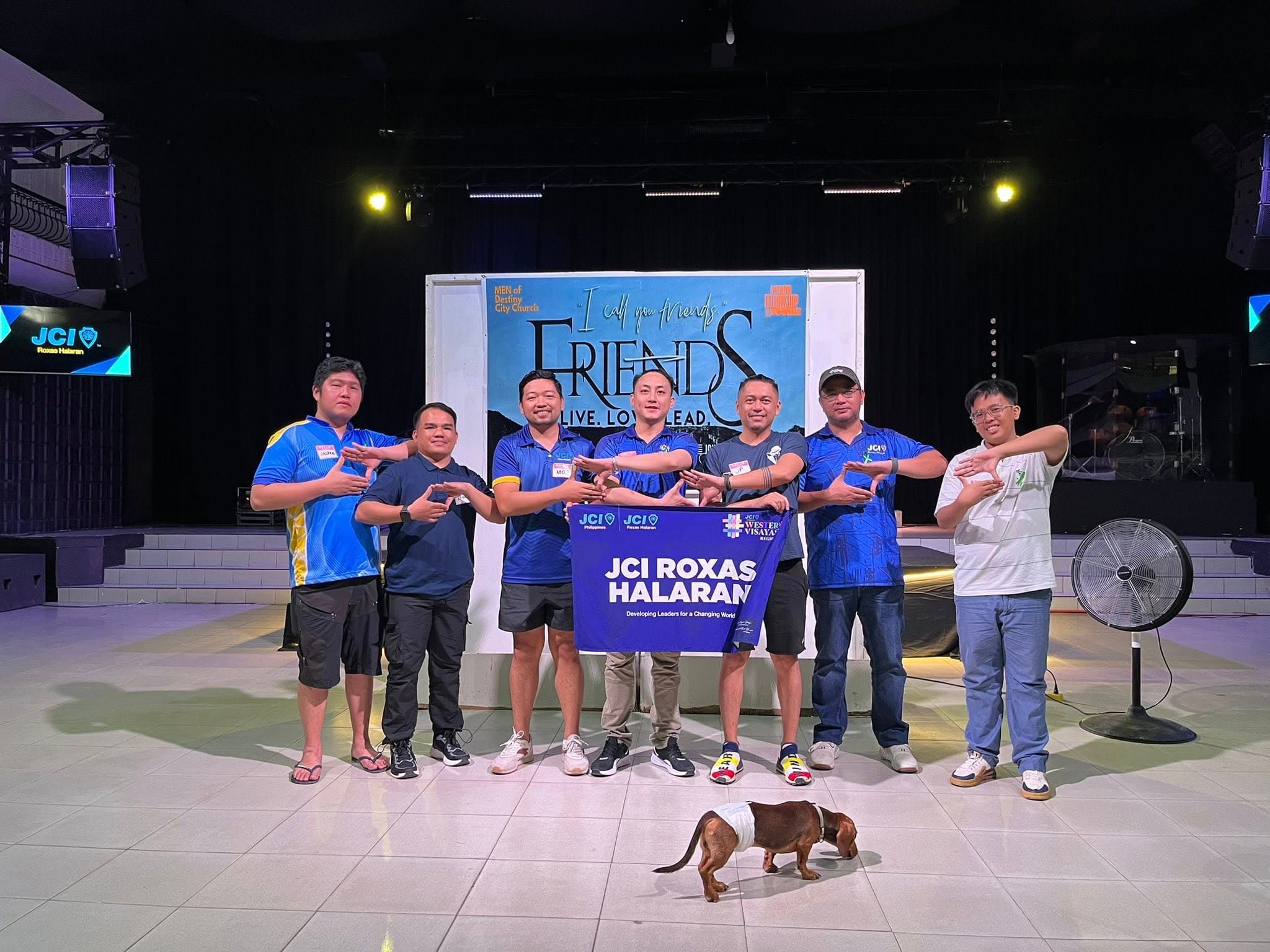
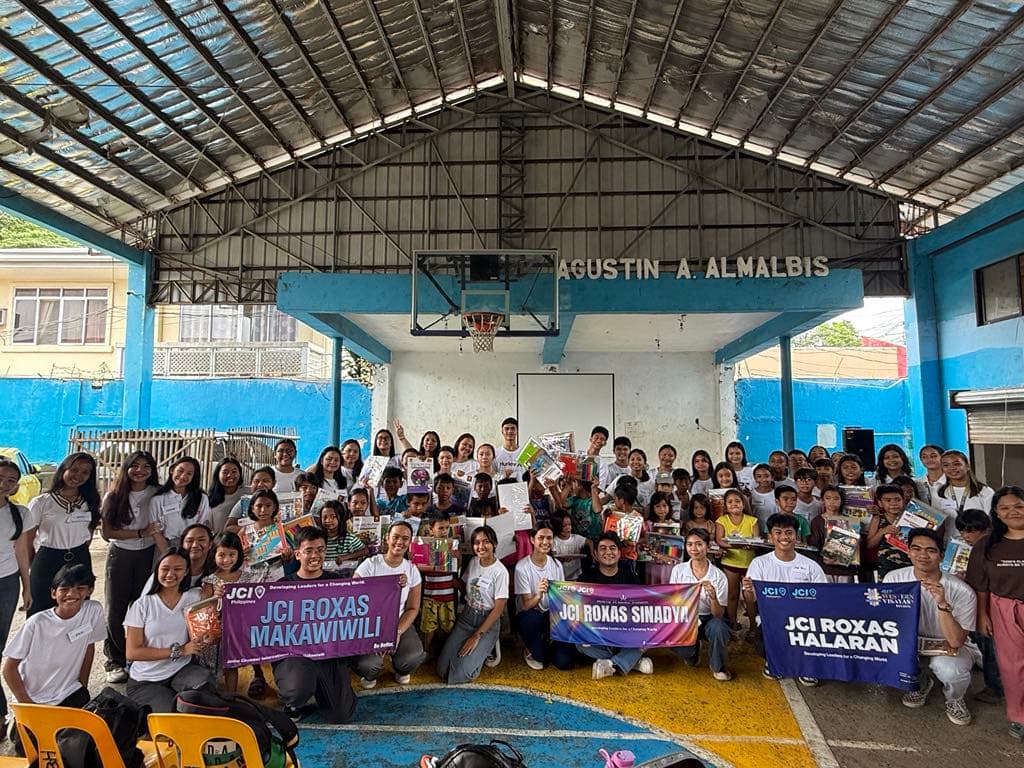
Junior Chamber International, the worldwide federation of young active citizens aged 18 to 40, encourages its local organizations to run projects that advance the SDGs, using its Active Citizen Framework to analyze community needs and design sustainable solutions. At JCI Roxas Halaran, several of our projects are built around specific goals:
- Goal 6, Clean Water and Sanitation. On July 15, 2024, the chapter was lead host of WaSH ME WHIP, the Area IV clean water and sanitation launch at Marcos V. Fuentes Integrated School in Dinginan, Roxas City. More than 60 learners joined hygiene and handwashing sessions, and four 55-gallon water drums were turned over. On June 24, 2026, the chapter launched the Blue Flow Initiative, an area-wide campaign that signed up viewers as "Water Guardians." In October 2026 the chapter received a CWAS Implementation Award at the JCI Philippines National Convention.
- Goal 2, Zero Hunger. The chapter's original song "111: Hapag ng Daigdig", released in 2026 as its anthem for the JCI World Congress, takes SDG 2 as its theme.
- Goal 3, Good Health and Well-being. The HalaRUN for Juan community run on June 14, 2026 drew over 600 runners to People's Park, Baybay, for Men's Mental Health Month, as the chapter's JCI RISE implementation for SDG 3. That month the chapter was also resource partner for a Symposium on Men's Mental Health hosted by Leon Ganzon Polytechnic College.
- Goal 10, Reduced Inequalities. The IPBC T10 Invitational Basketball League, co-organized with JCI Regatta - Iloilo and the Iloilo Pabalhas Basketball Club from July to September 2026, was anchored on SDG 10 and Deaf inclusion.
Other work relates to the goals by theme. The chapter joined CaPENRO's Provincial Arbor Day 2026 planting, which connects to Goals 13 and 15, and its "Be a Friend, Not a Bully" project was part of its 2025 Education for Peace work, which fits Goals 4 and 16. Want to plant trees with your own group? Read how to organize a tree planting.
Frequently asked questions
When did the Philippines adopt the SDGs?
The Philippines was among the UN member states that adopted the 2030 Agenda and its 17 SDGs in September 2015.
Who monitors SDG progress in the Philippines?
The Philippine Statistics Authority is the official repository of SDG indicators. DEPDev coordinates planning and the country's reports to the UN.
How many Voluntary National Reviews has the Philippines presented?
Four, with the latest presented at the UN in July 2025.
Can a small youth group really help with the SDGs?
Yes. The goals are reached through millions of local actions. A well-run barangay project with clear results is exactly the kind of work the SDGs need.
Take the goals home
The SDGs are not only for governments and the UN. They are a checklist for the kind of Capiz we want in 2030. See how our members put them into practice on our projects page, and if you're a man aged 18 to 40, join JCI Roxas Halaran to help.